How to Ask for a Credit Card on File in Pest Control
Introduction
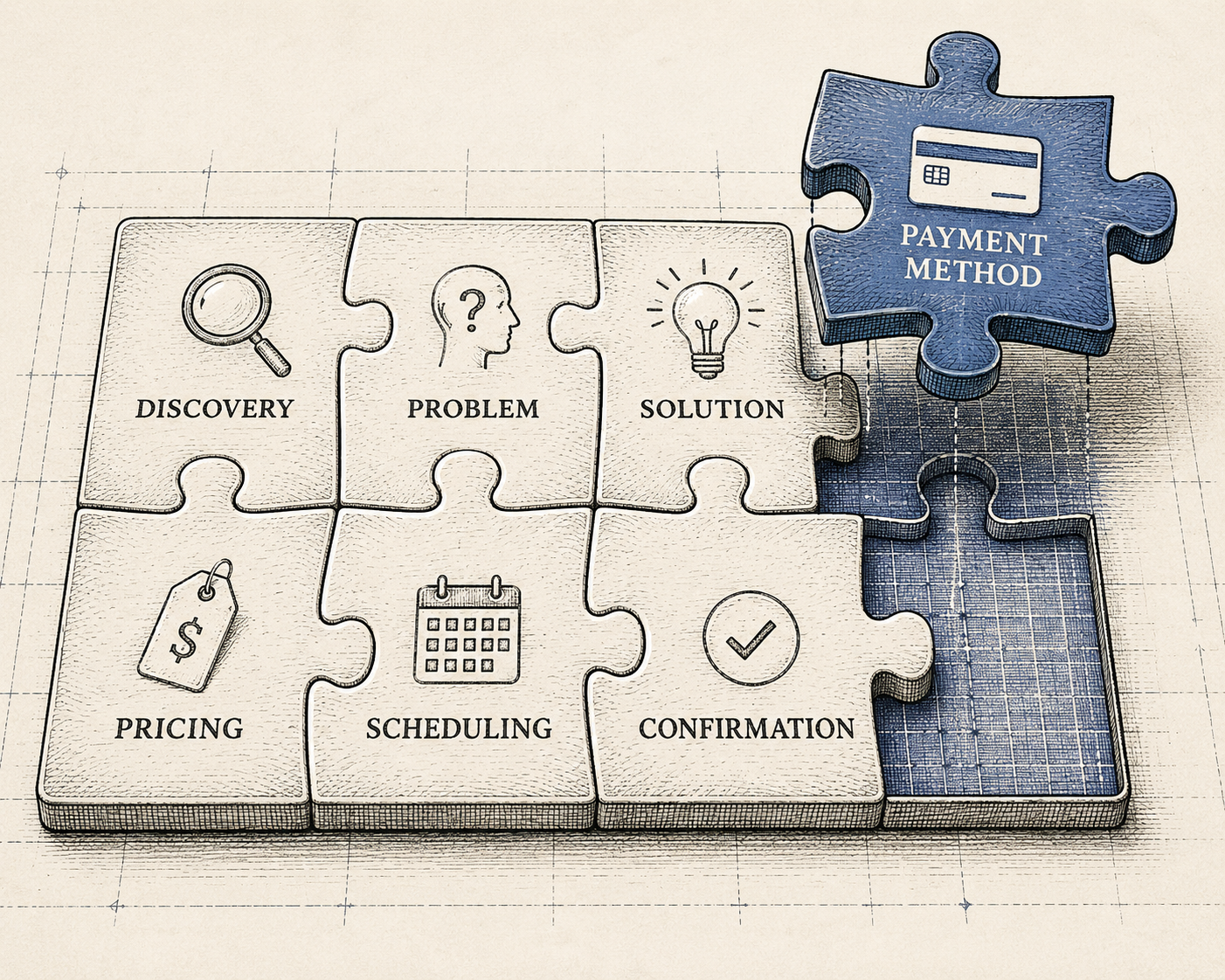
The pest control sale on the phone is almost done. The CSR is done with discovery and bridged into a solution that the caller likes. The agent and the customer are already picking a day and time for the appointment.
But a small thing remains to be navigated. The agent still has to ask for a payment method to put on file. Many pest control companies will not put an appointment on the calendar without it. Like most company policies, this one grew out of bad experiences. A customer went with another provider without canceling, or the technician forgot to charge on site.
How the agent builds that request shapes whether the moment stays smooth.
Building the request
When phrasing a request, the speaker has to make a few design choices.
The first is entitlement. That is how strongly the speaker claims the right to ask. High entitlement treats the card as a required next step. An agent might say, “To put this on the schedule, I need a payment method on file.” Low entitlement treats it as something the customer might reasonably refuse. That version sounds more like, “Would you mind giving me a card number, if that’s okay with you?”
A related choice signals whether you believe that complying should be easy. “I’ll also need a payment method on file for that appointment” assumes the customer can comply. “Do you happen to have a card handy that we could put on file?” orients to a possible block (no card nearby, someone else pays, discomfort reading numbers).
Another decision is whether to give a reason, and whose interests that reason emphasizes. Who benefits from the request? The policy mainly protects the company, but the wording can still put the customer back in the picture. “I need a card on file to hold that time for you” ties the ask to the appointment the customer wants. “I need a card on file so we can get paid for the work once it’s done” leans into the company’s benefit. “That’s how we book all of our appointments” or “Per company policy, we have to have a card on file before we can schedule” are process-focused reasons that do not imply either party’s benefit.
Word choice can also make the request feel smaller or bigger. Words like just, only, or the only thing shrink it. “I just need a card on file real quick” is a minimizer.
Planning how you phrase a request takes seeing it through the other party’s eyes. On payment-on-file policies, the fear that comes up more than any other is whether the card will be charged right away. Instead of waiting for that objection, the agent can pre-empt it. “I need a card on file. We won’t charge it until after the service is done.”
Findings from real calls
Those choices rarely appear alone. Agents combine them into a single opening. That is where the interesting patterns emerge.
We looked at booking calls for our customers where card-on-file is a hard precondition for putting the appointment on the calendar. On those calls, callers accept the ask with little pushback about two thirds of the time (roughly 66%). The rest show hesitation, an objection, or, less often, a refusal.
The same policy can sound three different ways. Start with a weak opening that leans on process and company interest:
“I have to get a card because that’s our policy.”
Company-sided and process-only reasons land weaker. When the reason centers on the company getting paid or protecting its billing, acceptance falls to the mid-40s.
Step up by stating the need plainly and tying it to something the caller already wants:
“To hold that appointment, I’ll need a card on file.”
That keeps the requirement honest and puts the customer’s slot in the turn. Softening the ask as if it were optional usually misfires. Customers can hear the gap between the words and the policy. This version is better, but it still leaves addressing the customer's fear of their card being charged for later. When that reassurance is missing, acceptance drops to about 58%.
The best combination adds the timing line in the same breath:
“The only thing I need is a valid card on file. That holds your appointment, and we won’t charge it until after the service is complete.”
In calls with that combination (a clear need, a customer-sided reason, and charge-fear preemption), acceptance with little pushback is about 86%. That was the strongest phrasing we saw.
Minimizers (just, only, real quick) show up in strong and weak openings alike. Soft words will not rescue a company-sided reason.
Callers rarely push back on a payment method simply because one is required. Pushback rises when the ask makes the requirement feel like it exists only for the company’s benefit. The strongest openings keep the policy clear and connect it right away to something the customer already wants, which is securing the appointment they just agreed to.